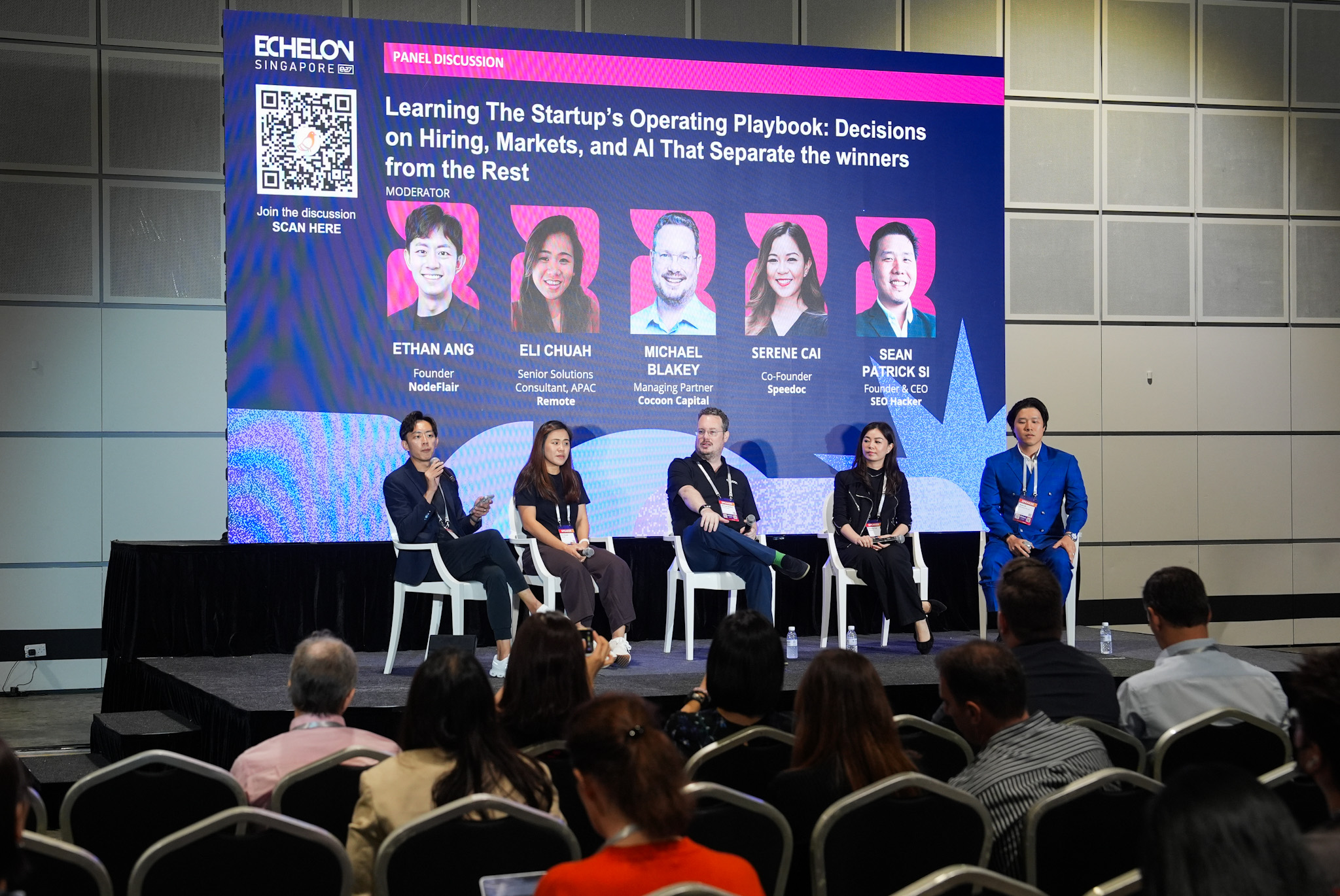
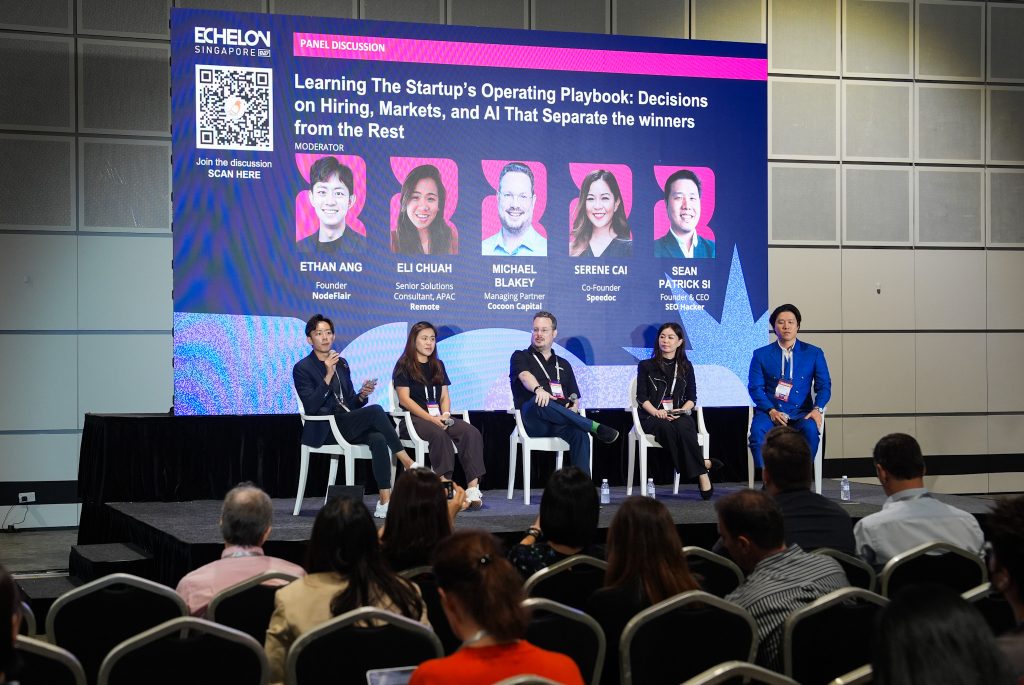
A few weeks ago I sat on a panel in Singapore — a VC, a couple of other founders, and me. The conversation was about AI, hiring, and how startups are spending their next dollar. I had a lot to say. Some of it I’d been thinking about for months. Some of it came out for the first time, in front of a room.
Here’s what I shared.
AI Won’t Replace My People. It’s Making Them Better.
We haven’t laid off a single person at SEO Hacker because of AI. Not one.
What we’ve done is upskill them. The grassroots-level skills — the ones AI is genuinely good at now — get supplemented by AI. So instead of just being a writer, you’re now an editor. Instead of just being a junior analyst, you’re working one layer up.
That’s a positive thing for my 74-man team. It’s not the doom story everyone is telling.
The Friction Most People Don’t Talk About
I’m Filipino-Chinese. I live in the Philippines. That’s where I started SEO Hacker 16 years ago, when I was 21.
Here’s something I told the panel that I don’t think they expected:
Paying Filipinos to do work you could replace with AI, in some use cases, is still cheaper than paying high-context tokens. Tokens are still expensive in my country because of the weakening peso. So the tension I have to manage is between the quality of the person — the intelligence, the logic, the algorithm of a human brain — and the cost of replacing that brain with software.
It gets worse. The Philippines has a brain drain. Our largest export isn’t bananas. It isn’t mangoes. It’s OFWs — Overseas Filipino Workers. The best brains in our country leave. I’m not proud to say that as a Filipino. But it’s the truth.
So the question for me as a CEO isn’t “should I replace people with AI?”
The real question is: how much do I spend on AI tokens to supplement the brains I have left, so that they don’t fail on the simplest tasks?
That’s the bet I had to make.
Hundreds of Hours Vibe Coding Rankseer
Since January this year, I’ve spent hundreds of hours vibe coding a system we call Rankseer. It is not built to replace my people — they’re still cheaper than tokens. It’s built to upskill them so far that they stop failing at basic tasks. So my managers can focus on the forest instead of whichever tree is on fire today.
Here’s how it works on the sales side. We feed Rankseer a prospect’s keywords and competitor data. It tells us why those competitors are ranking ahead. We analyze the output and turn it into a designed deck, brand it, and send it to the prospect:
“This is your current standing. You don’t know us — but we kind of know you. Want to talk?”
That alone has made my sales process radically more efficient.
Here’s the internal side. When Rankseer generates a blog post for a client, it doesn’t just publish. It goes through a review layer — a human layer to check it. That decision feeds back into Rankseer so the next post is better. The model learns from a human in the loop, not from a thumbs-up on a chat.
Notice what we did not automate: the client never talks to a bot. They still face my sales people, my account managers, my project managers. Their relationship is with a human. The AI is the engine behind the curtain.
Why I Refuse to Make My Clients Talk to a Bot
All businesses are people business.
The reason everyone hates talking to bots isn’t the bot itself. It’s what the bot signals. When a company you’re paying makes you talk to a bot, they are telling you — subliminally — that your value as a human being is equal to that of a piece of software.
We can’t always articulate it. But we feel it.
So at SEO Hacker, I will not put a bot in front of a paying client. The productivity gains stay behind the scenes. The pricing stays the same. The volume we deliver has grown ten times. That’s the deal — efficiency on our side, humans on theirs.
On Hiring — How I Automated Cultural Alignment
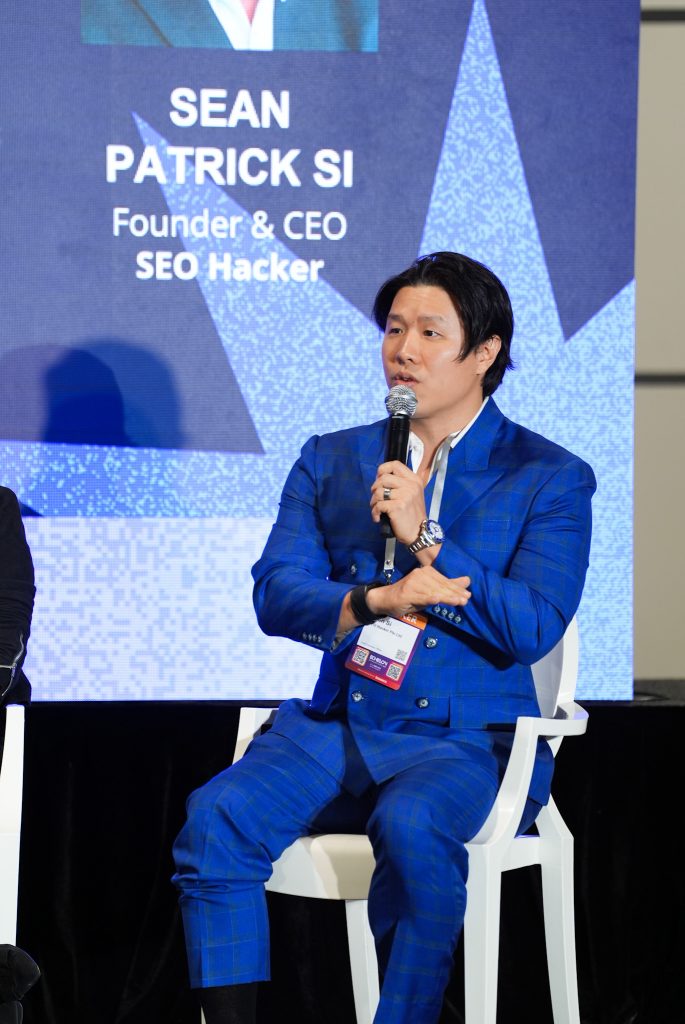
Someone asked about hiring. I told them I hire for two things, and neither is negotiable: attitude and aptitude.
If they have attitude but no aptitude, you’re just hiring friends.
If they have aptitude but no attitude, you’re hiring politicians who will make problems in your company.
At SEO Hacker, culture comes first. I personally wrote an 80-question exam — strongly disagree to strongly agree — and an algorithm I wrote myself tells me whether a candidate will be culturally aligned with my people. No matter how good they are technically. If they fail the culture exam, they fail. You have to be disciplined enough to stick with the result.
Only after a candidate clears culture and aptitude do I sit them down across the table, look them in the eye, and read their attitude. If they pass all three, you’ve got a keeper. Offer them something worth their while.
The Advice I Closed With
The moderator asked each of us for one piece of advice for the founders in the room. Here’s what I said.
I’m in a unique position. I’m a single founder. I started SEO Hacker as a freelancer at 21. I have no investors. I own 100% of the company. We’re 74 people based in the Philippines, with an office in Singapore.
So my advice — for anyone who is also the founder and the CEO — is this:
Don’t ever stop being as hands-on as you can.
People will tell you to sell some shares. Bring in a co-founder. Take a back seat. My advice is the opposite. Until you can no longer drive from the front seat effectively — and you yourself can tell when that day comes — keep driving.
Because those are the only golden years of a company.
The business might make more revenue when it has outgrown you and outlived you. But the golden years — the ones full of stories, full of teammates’ names, full of meaning — will always be the founding years.
Don’t trade them in early.
By God’s grace, we get to live them. And by God’s grace, so do you.